The Formation of Clusters of Stars and Brown DwarfsMatthew R. Bate Copyright and other information can be found at the bottom of this page.
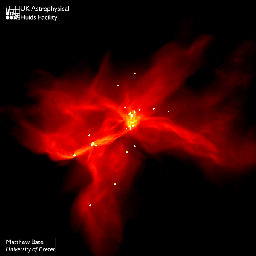
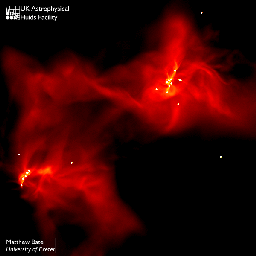
Since 2001, I have been performing some of the world's most complex computer simulations of star formation. The first calculation was of a relatively small 50 solar-mass star-forming cloud. It was purely hydrodynamical and performed in collaboration with Ian Bonnell (University of St Andrews) and Volker Bromm (Harvard-Smithsonian Center for Astrophysics) and was press released in April 2002. This was followed by 3 more hydrodynamical calculations investigating the effects of the star formation process on variations of the initial conditions and heating of the gas. The hydrodynamical simulations have culminated in a large-scale simulation of a 500 solar-mass cloud that formed more than 1250 stars and brown dwarfs and enabled the statistical properties of stars to be compared in detail with observations. Since 2008, I have been including radiative transfer and magnetic fields in the simulations. The effects of these processes on the star formation process were initially investigated by repeating the original 50 solar-mass calculations (below), but including radiative transfer and magnetic fields. The work with magnetic fields was done with Daniel Price and animations can be found at his website. Since 2012, I have performed star cluster formation calculations of 500 solar-mass clouds that include radiative transfer. These calculations typically produce 130-250 stars and brown dwarfs, including dozens of multiple stellar systems, the properties of which are in good agreement with observed stellar systems. In 2014, I published my first study of the effects of metallicity on star cluster formation by varying the opacity in the calculations. In 2019, I improved upon this study by performing calculations that combined radiative transfer with a model of the diffuse interstellar medium, a simple chemical model, and separate gas and dust temperatures. These calculations study star formation at metallicities ranging from 1/100 to 3 times solar metallicity.
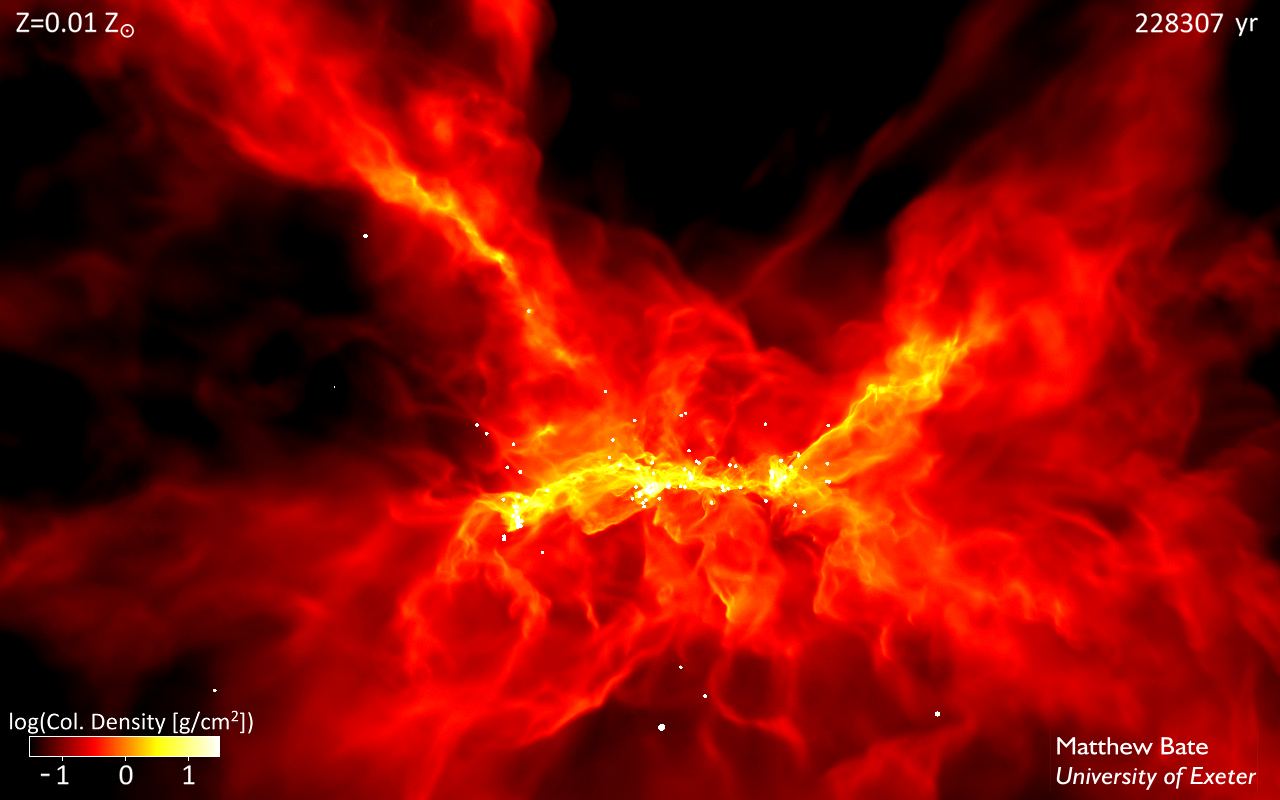
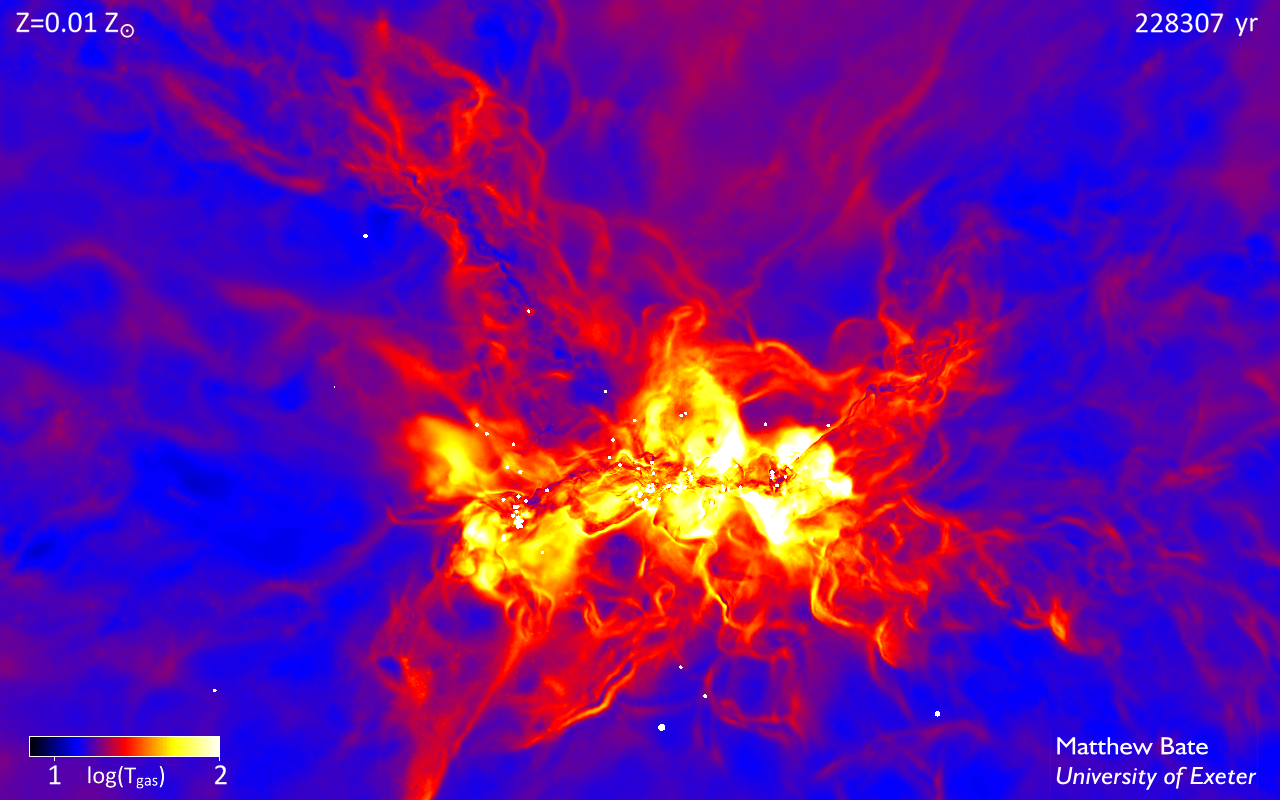
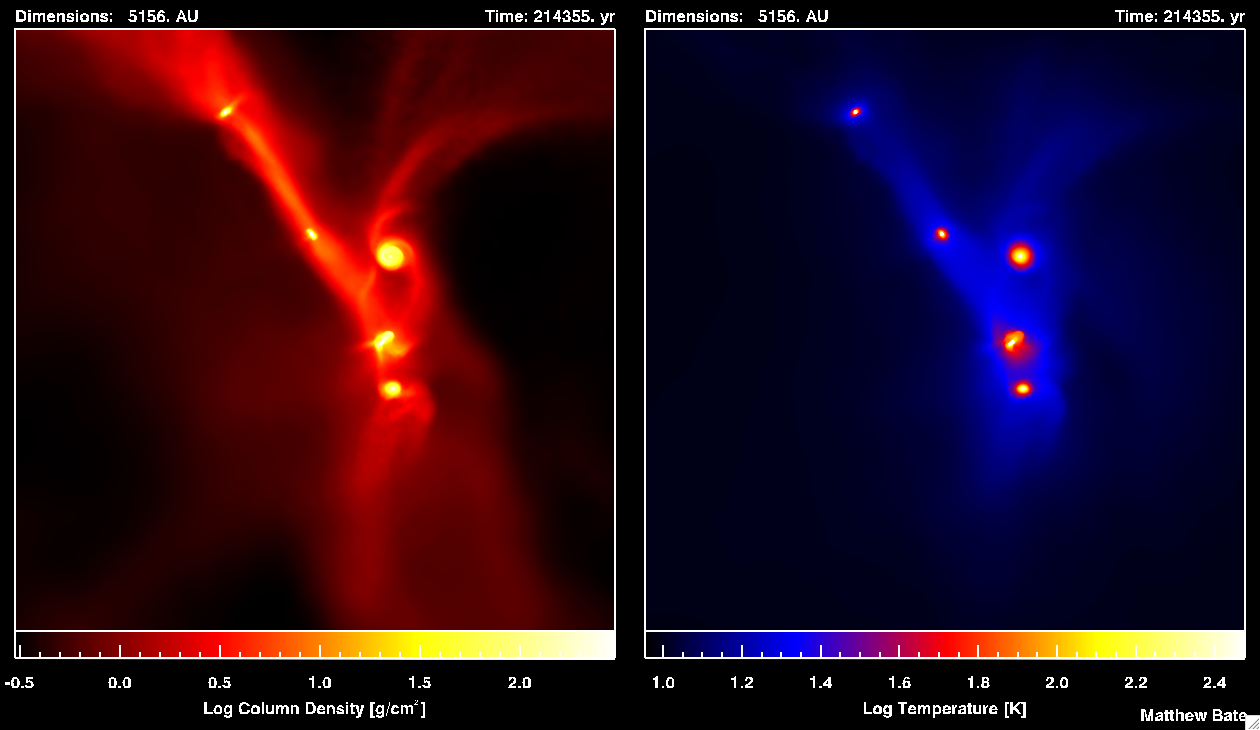
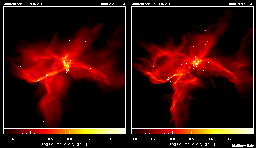
Radiation Hydrodynamical + ISM Simulations (2019-present)My latest star cluster formation simulations are of 500 solar-mass molecular clouds with a range of metallicities and that combined radiative transfer with a model of the diffuse interstellar medium, a simple chemical model, and separate gas and dust temperatures. Animations of these simulations showing both the column density and the temperatures of the gas, dust, and protostellar radiation fields were created. Click on the images below for more detail and to view the animations.
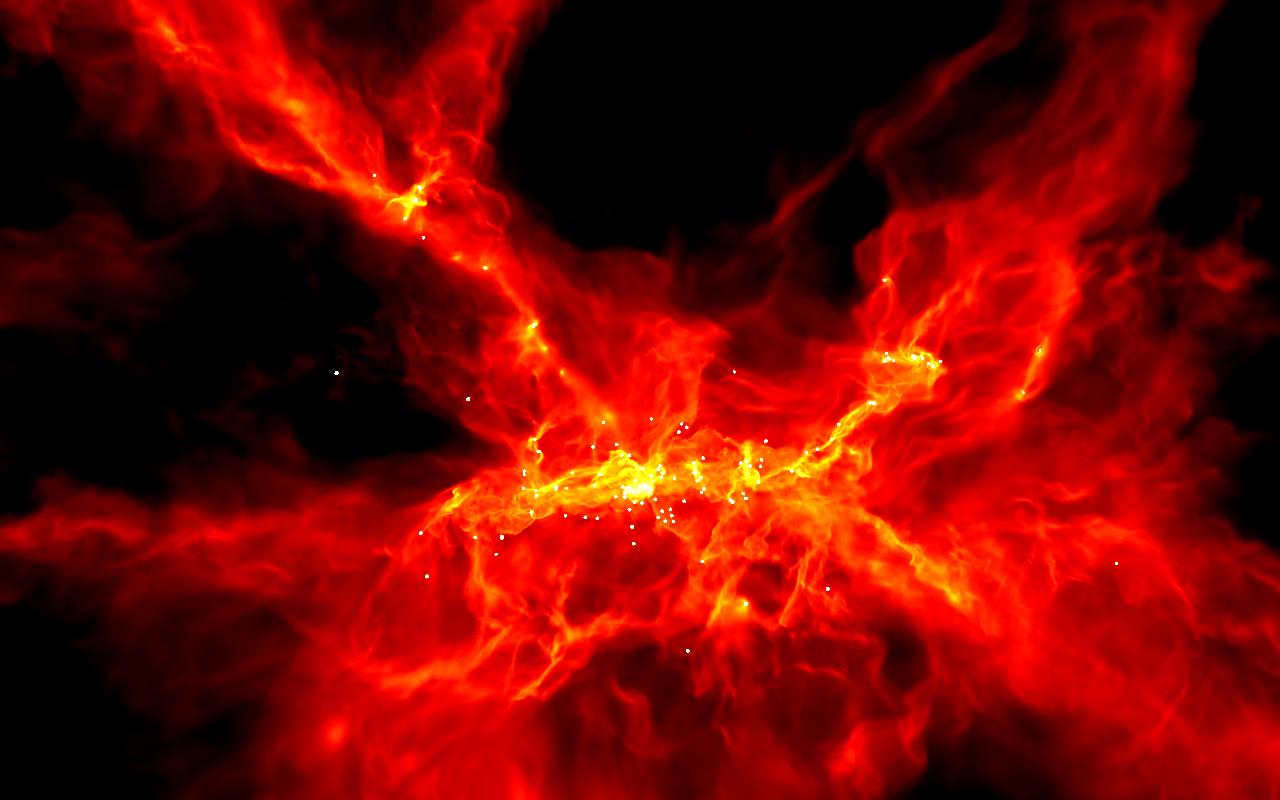
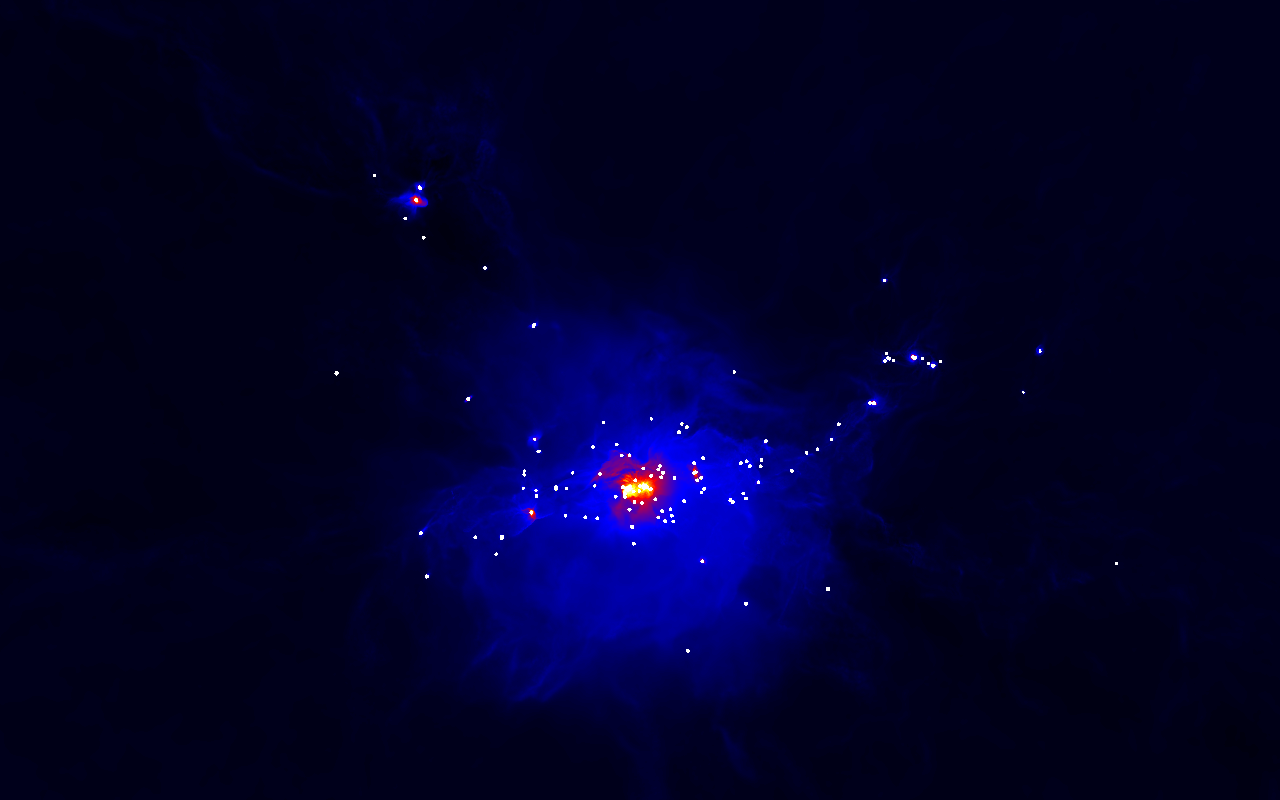
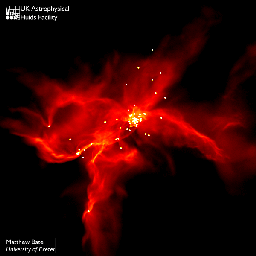
My large radiation hydrodynamical star cluster formation simulations were of 500 solar-mass molecular clouds which collapsed to produce a stars clusters containing 170-198 stars and brown dwarfs. Animations of these simulations showing both the column density and temperature were created. Click on the images below for more detail and to view the animations.
Hydrodynamical Simulations (2001-2009)
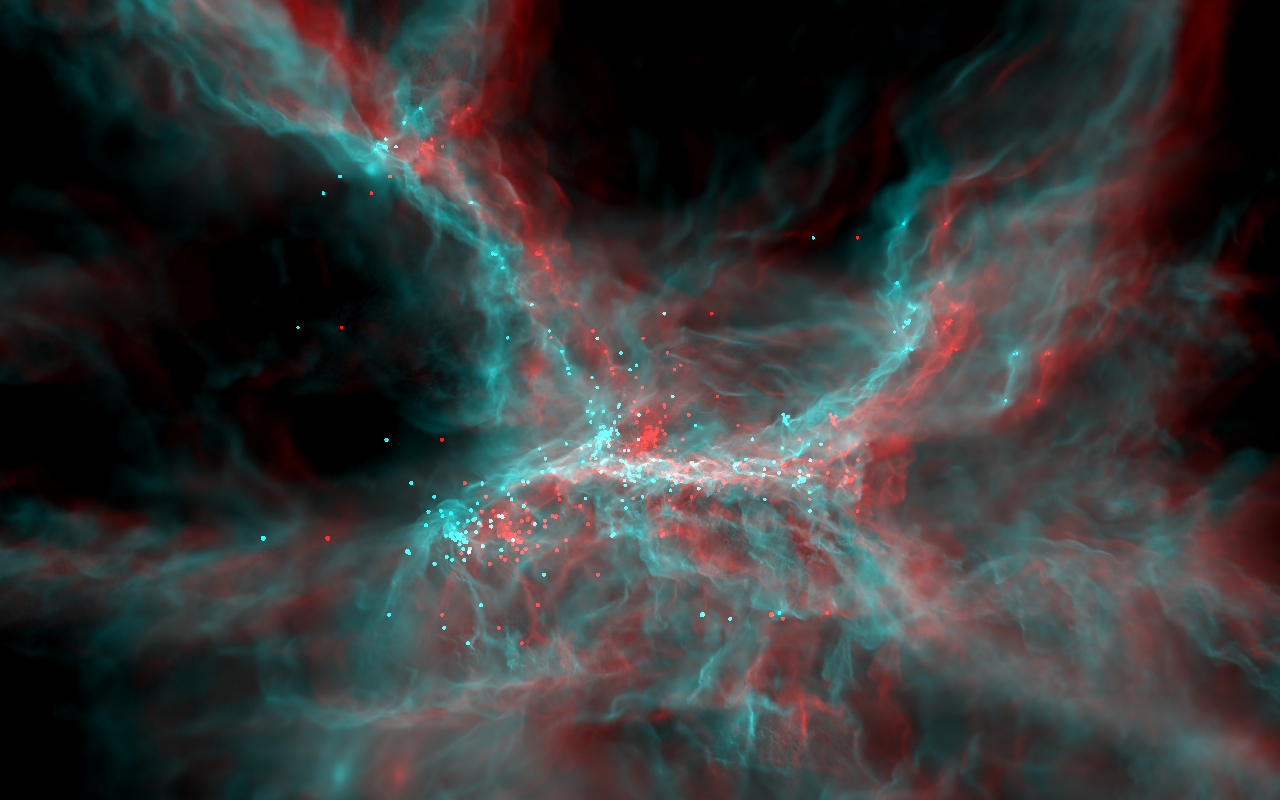
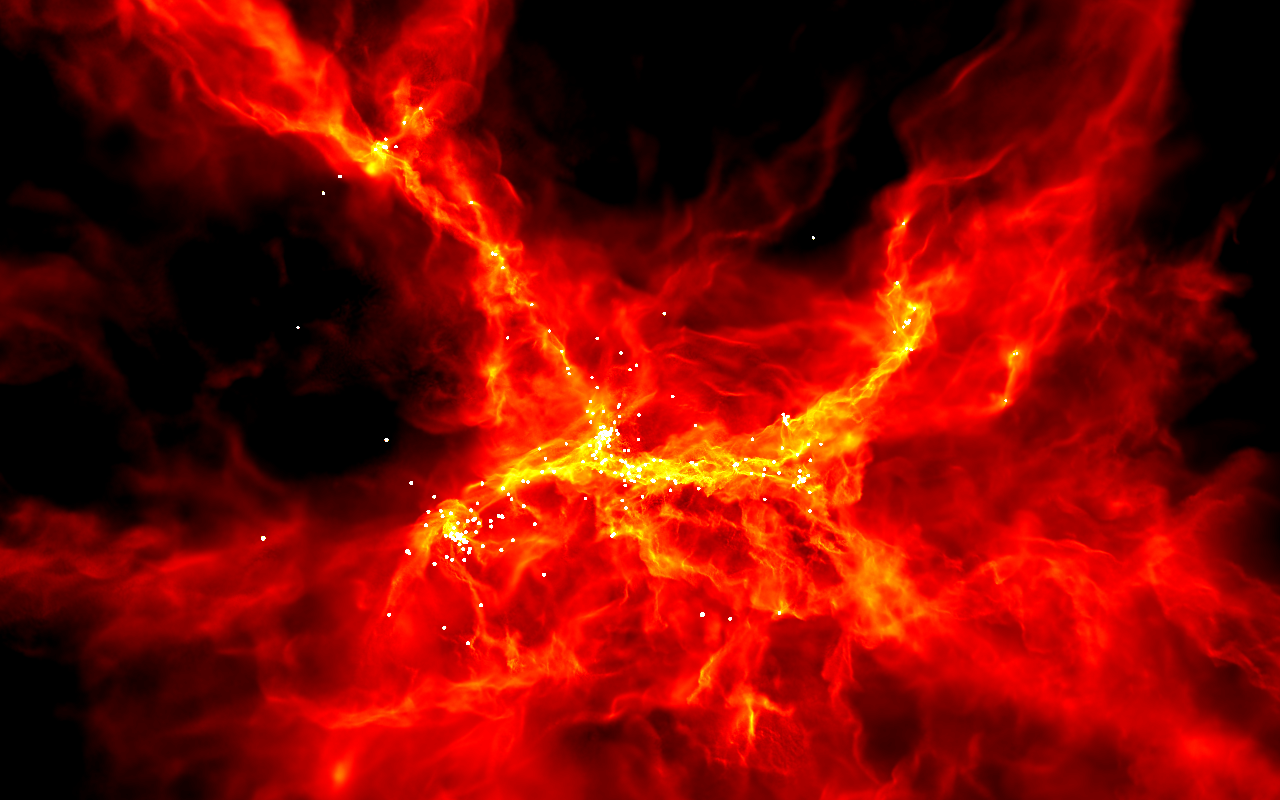
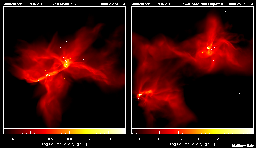
The largest hydrodynamical star cluster formation simulation was that of a 500 solar-mass molecular cloud which collapsed to produce a star cluster containing more than 1250 stars and brown dwarfs (Bate 2009a). Animations of this simulation were created in both 2-D and 3-D. Click on the images below for more detail and to view the animations.
Four hydrodynamical calculations of 50 solar-mass molecular clouds were performed.
These test the dependence of star formation on the initial conditions in molecular clouds. Animations of all four calculations are available. Click on the images below for animations and detailed information.
About these pagesMany of the theoretical calculations I conduct during my research into star and planet formation result in animations. New animations will be added at the top of the page with the dates that they were added. Copyright: Unless otherwise stated, all of the material on this site is the property of Matthew Bate. Any of my pictures and animations may be used freely for non-profit purposes (such as during scientific talks) as long as appropriate credit is given wherever they appear. Permission must be obtained from me before using them for any other purpose (e.g. pictures for publication in books). |